Showing posts with label vegetables. Show all posts

Thursday, November 19, 2009

Sauerkraut with a twist (sauerkraut "pizza" with onions and two cheeses)


When life hands you sauerkraut, you make pizza.

No?

I did. My bag’o’vegetables brought a container of organic sauerkraut, and I didn’t want a hot dog to go with it. (Unusual, certainly, but there you have it.) Since my dislike of them has not abated yet, potatoes were out as an accompaniment, and cooking soup seemed like too much work. But luckily, there is always pizza.

Following the lead from this recipe, I fried an onion in olive oil and added a nice pinch of caraway seeds. When the onions had softened, I added a few handfuls of the sauerkraut and warmed the mixture thoroughly. Then I let it cool to lukewarm before stirring in about half a cup of grated cheese (30+ mature Gouda, for those interested).

I did not have a pizza crust on hand, but the droopy left-over flour tortillas in my drawer were crying out for oven heat and quick consumption. Perfect. Onto the tortillas the cheesy, oniony sauerkraut mixture went. Because I am of the more-is-more school when it comes to cheese, I topped it with a dusting of parmesan before sliding the “pizza” into a hot oven for about ten minutes.

What came out was tangy, slightly chewy, slightly crispy and somehow quite luscious. Like a pizza, but without the risk of tomato stains for my white shirt. Not bad, eh, for sauerkraut on a crust.

Saturday, November 14, 2009

Warmth in My Belly (eggplant and mozzarella)

My house smells of red wine, garlic, tomatoes and cheese. It is a comforting smell, that helps fight the chills brought on by the sound of howling wind and rain lashing against the windows. When deciding what to cook, I was leaving through Sarah Raven’s Garden Cookbook and came across a recipe for eggplant with mozzarella. Grilled eggplant, lots of cheese and tomato sauce. Sounded perfect for a blustery day. And it was- hearty, creamy and bursting with warming flavors. Wanna give it a go?

Start by slicing two eggplants and two balls of buffalo mozzarella, and grating a pile of Parmesan.

Brush the eggplant slices with oil and grill them. Combine a can of tomatoes with a glug of oil, two cloves of garlic and a few shakes of dried thyme into a sauce. If you happen to have red wine standing around, add some as well. Simmer the sauce until it starts to thicken.
Put a layer of grilled eggplant slices in an oven-proof dish, and scatter with a handful of parmesan.

Add a third of the tomato sauce, and top with half the slices of mozzarella.

Repeat the process until you have used all the ingredients, and make sure to end with a layer of tomato sauce and grated Parmesan.

Cook for about 20 minutes. Eggplant with mozzarella!

Monday, September 14, 2009

Easing into Fall (baked tomatoes)


Psst. Want to hear a secret?

I’ll have to whisper, because I don’t want summer to find out.

I am looking forward to autumn.

See, not something we want summer to know about. She might stomp off in a huff, leaving behind grey skies and falling leaves. And what would that mean for us? It would mean it is time to eat mushroom pasta, and spiced apple desserts and warming soups. Okay, that's not bad. Not bad at all. However, it is not quite time. Not quite, but almost. Hot chocolate, pumpkin pie and hazelnut cookies have started to appear in my dreams. Soon, very soon.

But first, there are the season’s last tomatoes to bake. Molly Wizenberg explained how, and I cannot imagine a better transition into a cooler season.

Sunday, May 24, 2009

Sunny Day Pasta (Pasta with asparagus, feta, onion, lemon)


This is for days when you come home with a pink nose from the sun. For when you’ve been riding your bike, or lounging around on a terrace. It is for days with ice-cream cones and chats with friends. For the end of a warm afternoon reading the papers or a juicy book. It is for days like today.

Asparagus, feta, lemon and onion pasta

Serves 1

200 gr slim green asparagus
1 large red onion
25 gr feta
zest of half a lemon
1 tbsp lemon juice
large handful basil leaves
1 tbsp olive oil
a short pasta shape, enough for one person

Bring a large pot of well-salted water to a boil.

Peel the onion and slice it into slim wedges. Crumble the feta.

Heat the oil until warm. Add the onions and lower the heat. Cook until soft.

Wash the asparagus and snap off the woody ends of the stems. Slice each stalk in 3 cm lengths. Separate the tips and the other pieces.

Add the pasta to the water when it boils and set the timer for three minutes less than you would to fully cook the pasta. When the timer sounds, add the asparagus pieces, but not the tips. Set the timer for two minutes and add the tips when it sounds. Boil for one more minute and drain the pan. (If the simultaneous timing makes you nervous or you are not sure your asparagus are slim enough to be done in three minutes, cook the asparagus separately until they are tender but still firm.)

Leave the pasta and asparagues to cool for a minute or two. Add the softened onions, the feta and the lemon zest and juice. Mix thoroughly. Chop the basil into fine ribbons and add them too. Serve.

Tuesday, May 12, 2009

Broccoli with Benefits (broccoli salad with bacon and raisins)


My man is hiding behind the curtains. More accurately, he is blocked from my view by the curtains because he is outside. Not just hiding behind the curtains, but sitting on the other side of double pane glass, shivering behind a stack of papers. He was working and “Samantha Who” on the television was bothering him. So he settled on the balcony in seven-degree cold.

I offered to switch off the TV, but he has bouts of chivalry over odd things. Christina Applegate with no memory turns out to be one of them. Good thing then, that I made us broccoli salad tonight. I am sure his immune system appreciated the help from the brassica goodness.

While it is a lovely bonus, being healthy is not enough for a salad to make it onto my dinner rotation. Especially not if it has broccoli. Luckily for my man’s immune system, I have a friend who knows how to make nearly anything palatable. And while her tricks usually include lashings of butter, big globs of mayonnaise or generous amounts of cheese, the one she uses for broccoli is more friendly on the arteries. It has a modest helping of bacon bits and some raisins and makes broccoli taste seriously good. Okay, so it also has lots of mayonnaise, but you can replace most of that with yogurt without comprising the taste.

Tonight, I combined my friend’s tricks with a SmittenKitchen idea of using tangy dressing with onions on raw broccoli. And the mix worked, if I do say so myself. You get salty, you get sweet, you get tangy and you get crunchy, all while munching through an impressive dose of vitamins and minerals.

Bring on the seven degrees. On my man, that is.

Broccoli Salad

Serves 2

500 gr broccoli, florets and stem
100 gr bacon bits
handful of plump raisins
1/3 cup mild yogurt
1 tbsp mayonnaise
1 tbsp onion, finely chopped

Wash the broccoli and peel the stem. Slice the broccoli as finely as you can (using a knife, a mandoline or food processor).

Fry the bacon bits until they are mostly crispy, but with a soft bite.

Combine the yogurt with the mayonnaise and the onion. Season with salt and pepper to taste (keep in mind the saltiness of the bacon).

Put the broccoli in a bowl with the fried bacon bits, the raisins and the dressing. Toss gently until thoroughly combined.

Thursday, May 7, 2009

Slinky Shrooms (grilled oyster mushrooms with garlic and vinegar)


Grace is not my middle name. My movements have no flow or ease to them. I have stumbled over more doorsteps than I care to remember, I am intimately familiar with numerous sidewalks from slamming into them face first and once I ended up with my right leg stuck inside a Cuban sewage pipe. So I shouldn’t have been surprised when I nearly launched myself into a pile a of bricks this evening. And I wasn’t, but it still came as a bit of a blow to the ego that the only thing between me and a bloody face was the sand that slowed my frantic stumble.

When I got home, I needed graceful food to even the balance. The gazpacho I was planning to have was bumped off the menu. It was chunky and destined to leave big red blotches on my white shirt. Instead, I decided on setas a la plancha. Setas a la plancha. Doesn’t that sound supremely graceful? And its English translation, “grilled oyster mushrooms”, is almost as charming.

What first attracted me to this recipe weeks ago is the technique used to cook the mushrooms. You toss them in seasoned oil and then fry them at high heat on one side only. I was intrigued. Would they taste differently if only one side got direct heat? But it took this long to make them because the recipe also intimidated me. It calls for expensive, high-quality sherry vinegar to dress the mushrooms after frying. My most expensive vinegar cost a few Euro’s in a French supermarket and it is fake balsamic vinegar. Probably not what they mean by “good quality Spanish vinegar”. When I got home this evening, I didn’t care anymore. I wanted a touch of elegance and if it had to come from a humble place, then so be it.


Good call. The mushrooms are easy to prepare, and ready in under fifteen minutes. They look elegant and taste great, even with the lowly French vinegar. A bit smoky from the high heat, intense from the garlic, lively from the vinegar and smooth with the olive oil. I am not planning on making a routine out of semi-embarrassing myself in front of my neighbors, but if I get a plate of these every time I do, I might learn to appreciate my lack of grace more.

Setas a la Plancha, Humbly

Adapted from Moro London, Sam and Sam Clark, via Het Parool

Serves 4


500 gr oyster mushrooms
salt and pepper
4 tbsp olive oil
2-4 tsp vinegar (sherry or red wine vinegar)
1 small clove garlic, finely chopped just before use
½ tsp dried oregano

Cut any thick stems from the mushrooms. Tear them in half if they have grown into a tube shape so most of the spore sides can touch the pan later. Mix three tbsp of oil with salt and pepper to taste and toss the mushrooms gently with the mixture.

Heat a thick-bottomed skillet until very hot. Add a single layer of mushrooms, spore side down. Softly press down the mushrooms and cook until the bottom is nicely browned. Transfer to a bowl and cook the rest of the mushrooms in the same way. When all the mushrooms have been fried, mix them with the rest of the oil, the vinegar, the garlic and the oregano. Serve hot or at room temperature.

Monday, May 4, 2009

Asparagus to remember (asparagus with soft onions)

Today is the fourth of May. A day to honor those we have lost in war. Today we realise we are lucky to be where we are and that it isn’t self-evident, that it has taken hard work and pain to get here. Hopefully, that message sinks in and we do something with it.

Big words, but I don’t know where to let them take me. I am not brave, I don’t fight and, well, I don’t have a clue. Heck, I couldn’t even think of something appropriate to cook for today. What do you eat when you are supposed to be still and thoughtful, sobered by what has gone before? I thought of eating dry bread accompanied by a glass of water, but then I laughed at myself. I tried to think of black foods to eat, but felt that pasta with squid in its own ink would be dramatic rather than sober. And then my current affection for asparagus stirred and I decided the tall white stems would be dinner.

Asparagus are not the obvious solemn food. They happily whisper of spring and new beginnings. They sing “enjoy me now, we’re precious”. Around for a short time only, you cannot afford to dither or they will be gone before you get around to them. And maybe that is what this day is about, for the moment. About being here, today, and realising just how precious that is.

Asparagus with Soft Onions

Serves one, easily multiplied

1 small bunch of white asparagus, about 300 gr
1 large onion, sliced into thick half moons
2 tbsp olive oil + 1 tbsp for serving
1 egg

Thoroughly peel the asparagus, taking care to remove the stringy outer skin from the whole length of the stem, starting from just below the bulbous tip. Cook until tender but still firm (in a pan of water, over steam or in the microwave, with just enough water to cover the stems; start checking for doneness after ten minutes whatever method you use).

In the mean time, boil the egg to your liking. I like the yolk to be just a little runny and the white to be cooked through, so I boil a medium egg for about six minutes after I drop it in rapidly boiling water. Also heat about 2 tbsp of olive oil in a heavy skillet and add the onions. Fry them until they are soft and light brown.

When the asparagus are done, put them in a shallow bowl or arrange them on a plate. Sprinkle with a tbsp of olive oil and toss them gently to give them a glossy sheen. Finely dice the egg. Spread over the top of the asparagus, and sprinkle with salt. Layer the fried onions on top. Enjoy hot or warm.

Sunday, May 3, 2009

Dip Quickly (bagna cauda)


Dip, dip, dipdipdip. Dipdipdipdipdip.

You will have to dip quickly to keep this slippery stuff on your vegetables. A mixture of oil, anchovies, garlic and butter is bound to slide right off your dipping vessel. But if you’re quick enough, it will slide right into your mouth and it will be so worth it.

Much more than the sum of its parts, this mixture of pungent ingredients becomes silky and luxurious when heated, a wonderful dip for vegetables. Through some sort of secret process, or perhaps magic, it transforms Belgian endive into a sweeter version of itself and gives grilled zucchini a lush loveliness you would never suspect it can possess. I imagine it would be lovely with lightly steamed broccoli as well, and in combination with green asparagus… my salivary glands start working overtime at the mere thought.

Happy quick dipping!

Bagna Cauda

This is not an exact recipe- with something this intense, you will want to adjust proportions to your own liking. I will give the amounts I used for a dinner for one, though, to give you an idea of where to start.

Serves one, easily multiplied
Based on Nigella Bites

4 tbsp olive oil
6 anchovies packed in oil, drained
2 cloves of garlic, minced
knob of cold butter, about 2 tbsp

Gently heat the olive oil in a small saucepan. There should be enough oil to cover the bottom of the pan. If not, add more. Add the garlic and the anchovies and continue heating gently, stirring regularly until the anchovies have “dissolved” in the hot oil. Then remove the pan from the heat and add the cold butter. Whisk until the butter is fully incorporated and the mixture has thickened slightly. Taste, and add more butter if you like, then whisk again.

Serve with leaves of Belgian endive, strips of grilled zucchini or other vegetables with a bite. Keep warm if possible and dip quickly.

Monday, March 2, 2009

Easy Like Sunday Dinner (Lemon Artichoke Pasta)


Sunday nights pose a food challenge in my house. When I do not have people coming over for dinner, I find it difficult to get my act together on Saturday and buy ingredients for two dinners. Since shops don’t open on Sundays around these parts, an end-of-weekend challenge tends to result.

There used to be a good Turkish take-out place around the corner to solve the quandary. Unfortunately, it turned into a run of the mill shoarma place with little going for it aside from its industrial strength garlic sauce. There is pizza delivery, of course, but the places in my area can’t quite cope with the Sunday night rush hour and a pie can take hours to arrive. Literally. The last three times we dialed for tomatoes’n’topping on dough it took 2½, 1½ and one hour, respectively. Progress, I suppose, but not what you want for a relaxed meal to end the weekend.

Often, the only viable solution is to piece together a meal from whatever is floating around the kitchen and pantry. That always includes garlic and onions, and usually canned tomatoes, pasta and yogurt. A good base for quite a few meals, I am beginning to find out. Last week, there was the garlicky bean dip and this week lemony pasta with artichokes saved the Sunday.

The sauce for the pasta is loosely based on carbonara sauce, with garlic instead of pancetta and with lemon zest added for brightness. Oh, and a touch of cream, because that makes anything taste better (although it is not really necessary here, so don’t let a lack of left-over cream stop you from making this pasta). The artichoke topping combines the earthy flavor of artichokes with lemon juice for some zing and caramelized onions for sweetness. Tossed together with a pile of pasta, they taste luxurious but not heavy. Plus, this dish seems like it was a lot more trouble than it really is. Beats a a pizza that takes 2½ hours, no?


Lemon artichoke pasta

Serves 3

1 400 gr bag frozen artichoke bottoms, thawed*
1 large onion, peeled and sliced into thin half moons
1 tbsp olive oil
zest and juice from half a small lemon
½ tsp sugar, optional
2 eggs
2 tbsp cream, optional
about 50 gr freshly grated parmesan
freshly ground black pepper to taste
1 garlic clove, peeled and sliced into six pieces
knob of butter
300 gr dried pasta

Heat the oil in a wide skillet that will fit all artichoke bottoms in a single layer later. When the oil is hot, add the onion and turn the heat down to medium. Cook, flipping onions occasionally, until onions are soft and have a golden color. Add the lemon juice and about ½ cup of water (there should be a thin layer of water in the whole pan), stir and taste. Add the sugar if you want it a bit sweeter (a little goes a long way). Add the artichoke bottoms in a single layer, with the stem end of the artichoke nestling in the watery onion mixture. Cover the pan and cook for about seven minutes.

Meanwhile, bring a pan of salted water to a boil.

Mix the eggs with the cheese and the pepper, and the cream if using.

Add the pasta to the water when it boils and boil until al dente. Uncover the pan with the artichokes when the artichokes are tender but still firm. Continue to heat over low heat until pasta is done. When the pasta has about three minutes to go, place the butter and garlic pieces in a small sauce pan and melt over low heat; simmer until needed.

When the pasta is done, take about ½ cup of the cooking water from the pan and drain the pasta. Put the pasta back in its hot pan and add the melted butter but not the garlic pieces. Then add the cheesy egg mixture and the lemon zest and stir quickly and thoroughly, until each piece of pasta is covered in a saucy layer. Divide the pasta over plates and add artichokes (cut them into pieces first for ease of eating while watching a movie on the couch, but keep them whole for a prettier look). Serve hot.

* Buy frozen artichoke bottoms at a Middle-Eastern supermarket, or subtitute with any other sauteed vegetable that takes your fancy. Don't use canned artichoke hearts, though. They have a harsh acidity that will overpower the fragrant lemon zest.

Thursday, February 12, 2009

Pretty it ain't

Hi.

Please stand back while I kick in an open door.

Our enjoyment of food is tied to our perception of that food.

If I ask my man whether he wants a cheese cracker, the response is likely to be no, possibly with a frown thrown in for good measure. If I offer him the exact same biscuit but call it a Tuc cracker, I’m fighting him for the last one before I know it.

He’s not the only one who’s at it. According to the papers yesterday, cod caught in the wild tastes better than its farmed cousins. That is, as long as the test panel knows the fish roamed the seas before ending up on a plate. If the provenance of the fish is unknown, both types get the same tastiness-score.

And then there’s the example of a perfectly good piece of steak that has been died bright blue. Taste-testers enjoy eating it significantly less than when they’re served a steak within the usual color range. Even when told the hue comes from an innocent food dye, the meat doesn’t taste right to them.

Is it any wonder, then, that eating this thing was not an unequivocal pleasure?


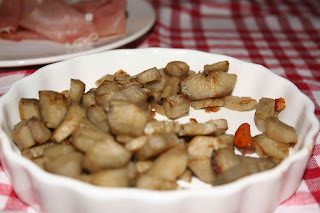
This is the kliswortel (burdock) my bag’o’vegetables brought last week. Sure, after I peeled it, boiled it and sautéed it with lots of garlic it looked a bit better:

Still, it was nothing more than okay. Yes, it had to do with the flavor- which was vaguely artichoke-like, but mostly bland. It was definitely to do with the texture- stringy and a bit tough. But after I clapped eyes on its intimidating, bulky sandiness, I don’t think it would ever have been love. You win some, you lose some, I suppose.

Now let me just close that door before it gets drafty.

Monday, February 2, 2009

Rutabaga Risotto


There is a sandy, dark brown thick… stick… in my bag’o’vegetables. It is about the height of a wine bottle and the width of my fist. Frankly, it is grotesque and I am intimidated by it. The recipe card says it is a “kliswortel”, which means about as much to me as its English name “burdock”. Nothing. A quick Google of the term yielded a handful of pictures of dainty-looking sticks that would not stand a chance if they got into a fight with my one. And very few recipes. Right, well, I’ll deal with that later in the week.

Tonight I tackled a different kind of previously unknown (to me) vegetable my bag’o’vegetables brought: rutabaga, aka swede (koolraap in Dutch). Intimidating in its own way, with chunks of mud clinging to purplish-orange skin and gnarly hairy roots sticking out. When cut in half, though, it is a pretty, deep yellow color. Perfect to bring color to a grey day. Cut into thin matchsticks, it became the basis of a rutabaga risotto with Asian-style flavorings: ginger, coriander seeds, garlic. Quite tasty, if I do say so myself. Let’s hope I get as lucky when I tackle the kliswortel monstrosity.

Rutabaga risotto

Serves 1 (can easily be multiplied)

1 tbsp of vegetable oil
Pinch of ground chiliflakes
Large pinch of ground coriander seeds
Small knob of ginger, finely grated (about ¼ tsp)
Half a small rutabaga, cut into thin matchsticks
1 clove of garlic, chopped finely (but not pressed)
½ tbsp of butter
1 small onion, diced
50 gr risotto rice
½ liter of chicken broth
1 tsp of lemon juice

Melt the butter in a small pan with a thick bottom. Add the onion and cook until translucent, but don’t let it brown. Add the rice, stir and cook for a minute or so, until rice is also translucent. Add about 200ml of broth and bring to a gentle boil. Cover the pan and simmer for 12 minutes, or until soft. Test for softness after twelve minutes, and take of the heat, but let stand in the covered pan for five minutes.

Meanwhile, put the oil in a skillet, add chiliflakes and coriander and heat. When hot, add the ginger and cook for a few seconds. Keep the heat high and add the rutabaga. Stir-fry for six minutes or so, until the rutabaga starts to soften and has brown spots where it has touched the pan. When the rutabaga is quite flexible, add about 100 ml of broth to the pan. Cook until most of the liquid has evaporated. Add another 100 ml and cook rutabaga until mostly tender but still a little crisp. By now, most of the second batch of broth will have evaporated.

When rutabaga and rice are both cooked, add most of the vegetable to the rice and mix thoroughly. Transfer to a (heated) plate and top with the reserved rutabaga. Sprinkle with the lemon juice. Serve hot.

Thursday, January 22, 2009

Yowza (Boiled Kale with Garlicky Bread and Fried Egg)


Yowza.

I love that word. It expresses so clearly what it means to convey: Yowza, this is not good, but I am dealing with it. Yowza, I won’t complain, but I do want to share that this is unpleasant. It is shocked surprise coupled to a sense of humor about the ridiculousness of the situation.

So, yowza. I got soaked down to my socks on my way home.

Today was the kind of day that inspires dreams of moving to warmer climes, or days spent in front of the heating wearing woolly socks. Overcast, grey, wet and cold. It was dark before five PM. Warm, soft kale on garlicky bread with a fried egg (or two) is the only sensible choice for dinner on days like these. Sure, cheese fondue would be lovely too, but that would not help my immune system fight the flu bugs my colleagues insist on sharing with me so liberally with every coughing fit. Plus, there is something immensely comforting about a pot of greens bubbling away on the stove for half an hour.

For dessert, there was creamy, pungent Saint Marcellin cheese. And some delectable cookies that I will tell you about later. (Aaaah, the tease! Sorry ‘bout that.)

The recipe for the kale is on Molly’s incredible weblog, but I have made it so many times now that I feel it should be here as well. I’ll tell you what I did tonight, but please read Molly’s recipe for the original version.

Boiled kale with garlicky bread and a fried egg

Serves 1

1 200 gr bag of pre-cut kale
2 glugs of olive oil
1 onion, in small dice
1 clove of garlic, sliced in half, one half left intact, one half pressed
good pinch of ground chili flakes
half a chicken stock cube
2 pre-baked crusty rolls
2 eggs
pinch of coarse sea salt

Heat a glug of olive oil in a Dutch oven on medium heat. Add the onions and cook until they are translucent. Add the pressed garlic and cook until you can smell the garlic. Add the kale and chili flakes, mix with the onion and garlic and heat until the kale has wilted.

Meanwhile, bring half a liter of water to a boil and dissolve the chicken stock cube in it. Add to the kale when it has fully wilted. Cover the pan with a lid and cook over low heat for half an hour or so.

Slice the pre-baked rolls in half and bake them cut-side down at the temperature and for the time specified on their package. When they are crisp and golden, remove from the oven and leave to cool a bit. Then take the halved garlic clove and lightly rub over the cut sides.

Taste the kale after half an hour to see If it is soft. If not, cook until it is. When the kale is done, remove the pan from the heat and keep it covered. Heat a glug of olive oil in a heavy skillet over medium heat and break the eggs into the pan. cook until the white is set but the yolks are still liquid.

Scoop the kale out of the pan, draining it from most of the liquid as you go. Put it on a plate and lay the fried eggs on top. Serve the kale with the bread. Alternate bites of bread covered with kale with bites of kale with a piece of fried egg.

Sunday, January 18, 2009

In Praise of Leaves (Quick Caramelized Belgian Endive)


It is time. Time to give credit where credit is due: Belgian endive is a superhero vegetable. Granted, it does not fly around in a tight blue outfit saving lives, but think of all the things it does do. It serves as the basis of salads, feeling equally at home with fruity partners (apple, tangerine, banana) and intensely cheesy ones (blue cheese, mature Gouda). It is a useful carrier for snacks at parties. It turns into a seductively silky tangle when braised. And dressed in a sweet little dress, it is the perfect complement to many a meaty main dish.

It is only fitting, then, that we call Belgian endive “white praise” in Dutch. I suppose you could nitpick and tell me that, technically, the “praise” isn’t so much praise as a shortened form of “leaves”. But why would you?

And to convince you that this is indeed a praise-worthy vegetable, I will give you the recipe for my quick’n’dirty caramelized Belgian endive. The day will come, I am sure, when I will spend an hour or two braising the white leaves into tenderness, basting them with sweet cooking liquid regularly to get a perfect caramel coating, as I once saw a friend’s man do. Until then, this recipe is a quicker (if less sophisticated) way to enjoy some sweet along with the delicate bitter and gentle crunch of the endive. And isn’t that what superheroes are about? Bringing sweet to the bitter, and in record time.


Quick caramelized Belgian endive

Serves 2

4 spears Belgian endive
1 tbsp olive oil
1 tbsp Balsamic-style vinegar
1 tsp sugar
3 tbsp Parmesan, finely grated

Remove any ugly leaves from the endive spears. Rinse them and dry thoroughly. Halve vertically and remove hard bottom bits. Slice halves into thin strips, still cutting vertically so you and up with long, thin strips rather than half moons.

Heat a skillet until hot, add the oil and swirl it around the pan. Add the endive and leave for a minute or so, until brown spots form on the bits of the vegetable touching the pan. Turn over the strips and lower the heat to medium. Cook endive until it starts to soften. Meanwhile, heat your broiler.

Sprinkle the vinegar over the endive and toss to coat. Sprinkle over the sugar and leave for a few minutes until it “melts” into the vinegar-coated vegetable.

Tranfer Belgian endive to an oven-proof dish. Dust with the Parmesan and broil for five minutes, or until cheese has melted and turned crispy.

Serve hot.

Monday, January 12, 2009

Labanese Moussaka for Four


There is this thing that happens when you have people over for dinner. You plan a meal and then make a few dishes extra, to make sure there is enough. And then you add one more because it goes so well with the others. Maybe one more, just in case, and then you’re done. Next, you’re eating left-overs for the rest of the week.

Yeah. That did not happen to me last night.

One of my guests did not show up, and still I don’t think everyone had enough to eat. The shock, the horror, the sheer panic. I wanted to hide in the bathroom until they had all gone home- hungry. Instead, I baked emergency cookies and thought brave thoughts of helping people stick to their resolutions. That did little to help things, though (obviously, I burned most of the cookies- “hiya Murphy”) and I cringe when I think of everyone politely leaving each other the last few bits of eggplant.

How did it happen? I made Nigella Lawson’s Lebanese Moussaka, which I thought she said serves eight. Turns out she doesn’t tell you how many it serves (not in my Dutch translation anyway), but several transcriptions of the recipe on the internet say it serves four. ARGH. I served seven people a dish meant for four. No wonder they were politely taking mini-servings: they were getting about half they were meant to. I’d also roasted quite a bit of chicken, and had bread and (not enough…!) salad, but I fear some empty stomach grumbling went on later that night.

The last straw I cling to is that there was quite a sufficient amount of food but that people just couldn’t get enough. It is indeed tasty, this thing Nigella has you do with eggplant and chickpeas. You soften onions and garlic, you add pomegranate molasses and tomatoes, stir in cinnamon and all-spice. It makes for a bewitching taste of the Middle East, or what I think that might be. Still, whether it is good enough to keep people coming back for more even when full? The jury’s still out. Why don’t you give it a try? I promise you won’t be sorry.

As long as you don’t try to feed more than four people.

Lebanese Moussaka

Slightly adapted from Nigella Lawson’s How to Eat

Serves 4 (not 7)

appr. 500gr eggplant
olive oil
1 to 2 onions, peeled and sliced thinly
10-12 small cloves of garlic, peeled and cut into strips
150 g chickpeas, cooked
1 1/2 tablespoons pomegranate molasses
500g canned tomatoes
1 1/2 teasons salt, or to taste
1/2 teaspoon cinnamon
1/2 teaspoon allspice
1/4 teaspoon freshly ground black pepper
200 ml water
Generous handful of cilantro, roughly chopped

Wash the eggplant, slice off the stems and cube the rest of the flesh- the sides of the cubes should roughly measure a centimeter. Heat some olive oil in a pan and brown the eggplant in batches until nicely golden in color. Keep the prepared eggplant in a separate dish.

Sweat the onion and garlic in some olive oil, until soft and translucent. Add the chickpeas, stir, then add the pomegranate molasses. Return the eggplant to the pan. Quarter the tomatoes and remove seeds. Add tomatoes to the pan and stir in salt, cinnamon, allspice and pepper. Add the water and bring to a boil. Lower heat, cover pan and simmer for 45 minutes, or until eggplant is very tender.

Can be served warm or cold., sprinkled with the cilantro (Nigella suggests replacing the cilantro with mint or parsley, if you like).

Monday, November 3, 2008

Bag'o'vegetables

There is a pile of wild spinach sitting on my counter, nestled against a pile of red onions and thick carrots. In the corner are three pears and a package of bean sprouts. Just looking at the abundance makes me feel fit- maybe its vegetable healthiness is transferable through sight?

The produce came to me through a scheme students at my university run. You order one week, pay them a small sum and the next week you get a bag’o’vegetables, full of organically grown vitamins and fibre. And flavor, lovely flavor. I dig the scheme, and not just because I get a surprise selection every week. Or because they give me a recipe for each kind of plant I get- although that is much appreciated. No, it is because I find out about vegetables I wouldn’t have discovered otherwise. Have you seen scorzonera, for instance? Not a pretty-looking root even on a good day. I had never yet been able to work up the courage to buy a bag of the gnarly, dark brown sticks. And there it was in my bag’o’vegetables last week and I had to do something with it. (Other than tossing it, which would have been wrong-wrong-wrong.)

Out came Sarah Raven’s Garden Cookbook (which, by the way, is one of the loveliest books about food I have met to date) and a recipe for scorzonera in garlic butter. Raven has you simmer the peeled scorzonera until they are soft, bathe them in a butter with gently fried garlic and finish with a big handful of chopped parsley. What you end up with is a subtle sunchoke flavor, enlivened by garlic and enriched with butter. (I substituted a few chili flakes for the parsley, mainly because I didn’t have any parsley. The replacement added a warmth I would have been sad to miss.) A simple, wintry dish for a simple, stormy Monday- what more could you ask for from a bag?

The planning for this week’s discoveries has begun. I am thinking:

Soba noodles with bean sprouts and peanut dressing
Orange/carrot juice
Chocolate-dipped pears
Garlicky spinach with quinoa and a fried egg
Onion tart with goat’s cheese

But that’s just the start…

Scorzonera in garlic butter
adapted from Sarah Raven’s Garden Cookbook

Six scorzonera sticks
Splash of red wine vinegar
Knob of butter
A pinch of ground chili flakes
Sea salt to taste

Peel the scorzonera and place them in a bowl of water with red wine vinegar. Bring water to a gentle boil and simmer scorzonera until tender. Drain.

Melt a knob of butter. Crush a clove of garlic and fry gently in the melted butter. Mix in ground chili flakes. Add scorzonera to butter mixture and mix. Sprinkle with sea salt.

Serve hot.

Thursday, April 24, 2008

Cooking for the heart

I've had a few days off work (sort of), so I can be found in my kitchen even more regularly than normal. On Tuesday, I cooked and baked for the two women who raised me (not by themselves, my dad, for one, was intimately involved- but I wouldn't be me without them). There were stuffed portobello mushrooms and grilled asparagus for my mother after a day of hard work. And there were lemon sables for my great-aunt, who is in a home while she recovers from hip replacement surgery. Vegetables and cookies to show I care- food from the heart.

Today, it was just me and dinner wasn't so much from the heart as for the heart. I got " Cooking for a Healthy Heart" from the library when my ever-tightening pants told me it was time to Stop. Eating. The. Wrong. Thing. Right now. It's got quite a few lovely recipes (in spite of a tendency to consider vegetable spread an acceptable ingredient)- in fact, the caponata I described earlier as the first thing I cooked my man is from this book. Today, a recipe for salmon with lentils and dill caught my eye.

I've had a box of lentils sitting in my pantry since we got back from a holiday in France last year, stumped as to what to do with them. (Also, a little scared I wouldn't like them. They are Puy lentils, that everyone always loves and I don't like legumes in general. These were like a last-ditch attempt to teach myself to like this good-for-you food group. My experiment a few weeks ago to do the same with home-soaked chickpeas ended in a pan of inedible, black soup. But, uhm..., that might have had something to with the use of black pantyhose to make a bouquet garni. Nigella said nothing about using colorless pantyhose...) This recipe was my keep-my-fingers-crossed attempt at making something delicious from pulses.

And, boy, was I relieved. Even though the lentils had a bit of that mealy-ness I dislike so much, this dish was a keeper. Lentils brightened by a herby dressing, pieces of sweet roasted pepper and juicy salmon all mixed with a good dose of dill and spring onions. Tasty, healthy, lovely.

Lentils with salmon and dill
Adapted from " Cooking for a Healthy Heart" by Jacqui Lynas

125gr filleted salmon
1 red bell pepper, roasted, peeled and cut into bite-size pieces
50 gr of Puy lentils
handful of dill, finely chopped
2 spring onions, finely chopped (reserve a little to use as garnish)
lemon juice for sprinkling

dressing
small clove of garlic, peeled
handful basil leaves
handful dill
1 tsp mustard
1 pickled Turkish green pepper
juice of half a lemon
small glug of olive oil

Boil lentils according to package instructions (mine said to start with cold water, bring to a boil and cook for 25 minutes- but they were a bit mushy and could have used a little less time in the pot). In the mean time, make dressing by pounding all ingredients except oil together with mortar and pestle. When ingredients have turned to a bright green paste, add enough olive oil to make thick dressing.

Poach salmon until almost-done (please don't overcook). Drain lentils when done and immediately mix with dressing, bell pepper, dill and spring onions. Leave to stand for a while to allow lentils to soak up flavors. Add salmon, toss. Serve with a little extra spring onion on top.

Serves one

Grilled asparagus
Adapted from "Het Basiskookboek" published by Albert Heijn

Bunch of green asparagus
Olive oil
Lime juice
Nice, crunchy salt for sprinkling

Wash asparagus and break off bottom 2cm or so (no need to peel). Pat dry and sprinkle with about a tablespoon of olive oil. Toss asparagus to coat with the oil.

Heat a grilling pan to hot, put asparagus in pan. Turning them occassionally to brown on all sides, cook asparagus for eight minutes, or until tender when pierced with a fork.

Mix a good glug of olive oil with lime juice to taste to make a dipping sauce for asparagus. Sprinkle asparagus with a little salt and serve with dip on the side.